
Jersey Kings

Starting out
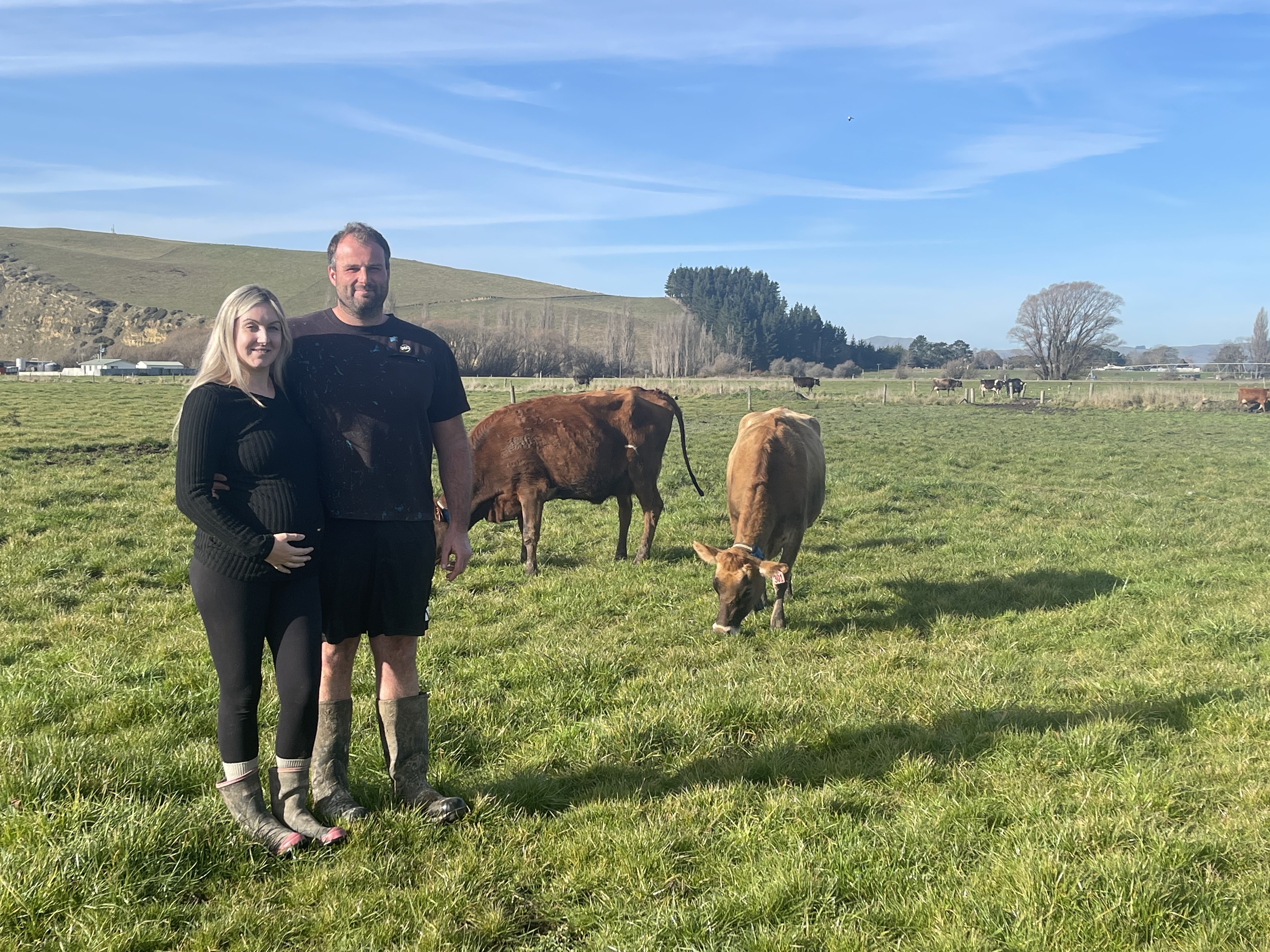
Canterbury dairy farmers Ben and Allie King credit their success to setting goals-and sticking to them.
“We decided within three years we’d be contract milkers and then 50/50,” Allie says. “That focus got us here. It’s a tough industry at times, but it’s also incredibly rewarding.”
The Kings now farm in Rotherham, North Canterbury, where they relocated from Ashburton in 2022 for the second time.
Their dairying journey began in Fairton, Mid Canterbury, in 2015 after a major career pivot.
At the time, Allie was working as a customs officer at Christchurch International Airport and Ben was a livestock agent for PGG Wrightson.
“I knew nothing about farming,” Allie recalls. “Within nine months Ben moved to Ashburton, and I followed.”
That move marked the start of a new chapter, but one that required sacrifices.
Climbing the ladder
“We had just bought a nice house when Ben said, ‘I think I might go farming.’ I didn’t realise that meant moving out of our house and onto a farm,” Allie laughs.
She took a job at Stocker Dairy Solutions, where she gained an early grounding in dairying, while Ben started as a farm assistant.
It didn’t take long for him to climb the ladder.
“Within weeks the 2IC left, and I had to step up,” Ben explains. “The farm owner had three sheds, and eventually I was unit manager and working between them all. It was a big jump, but I learned a lot.”
After several moves - including a stint in Culverden managing 600 cows - the couple returned to Ashburton as contract milkers, then progressed to variable order sharemilking. Determined to build equity, they sold their house to invest in stock.
“We bought 64 calves and 30 heifers, the best we could afford,” Ben says. “That was the start of growing our herd.”
Their persistence paid off. In 2022, Ben cold-called North Canterbury farmer Berry Neppelenbroek about a potential 50/50 sharemilking role on a farm he had purchased with his wife, Rachel.
“He hadn’t even advertised, but I took a shot,” Ben says. “A week later, he offered us the job.”
Moving back to move forward
The couple admit they were hesitant to return to Culverden.
“The first time we lived here, it was incredibly isolating. I swore black and blue I’d never come back,” Allie says.
“To be honest, it was tough. It’s a small town, and we felt isolated. We didn’t have friends there the first time, and socially it was hard. That’s the reality of moving farms, you don’t always fit straight in.”
But the chance to achieve their 50/50 goal, combined with now having friends nearby and their young son Lincoln, changed her perspective.
Allie also credits Dairy Women’s Network for making the move easier.
“That gave me a community,” she says. “That made all the difference.”
Today the Kings milk 590 cows on 170 effective hectares, aiming for 660 peak this season.
“Our goal is 363,000 milk solids - about 550 per cow,” Ben says.
The farm owners invested heavily in pasture renewal, irrigation upgrades, in-shed feeding, and automation, with Ben and Allie investing in AllFlex collars.
The improvements have paid off: they’ve twice won the North Canterbury Vet Centre’s Dairy Reproduction Excellence Award for six-week in-calf rates above 80%.
The Jersey difference
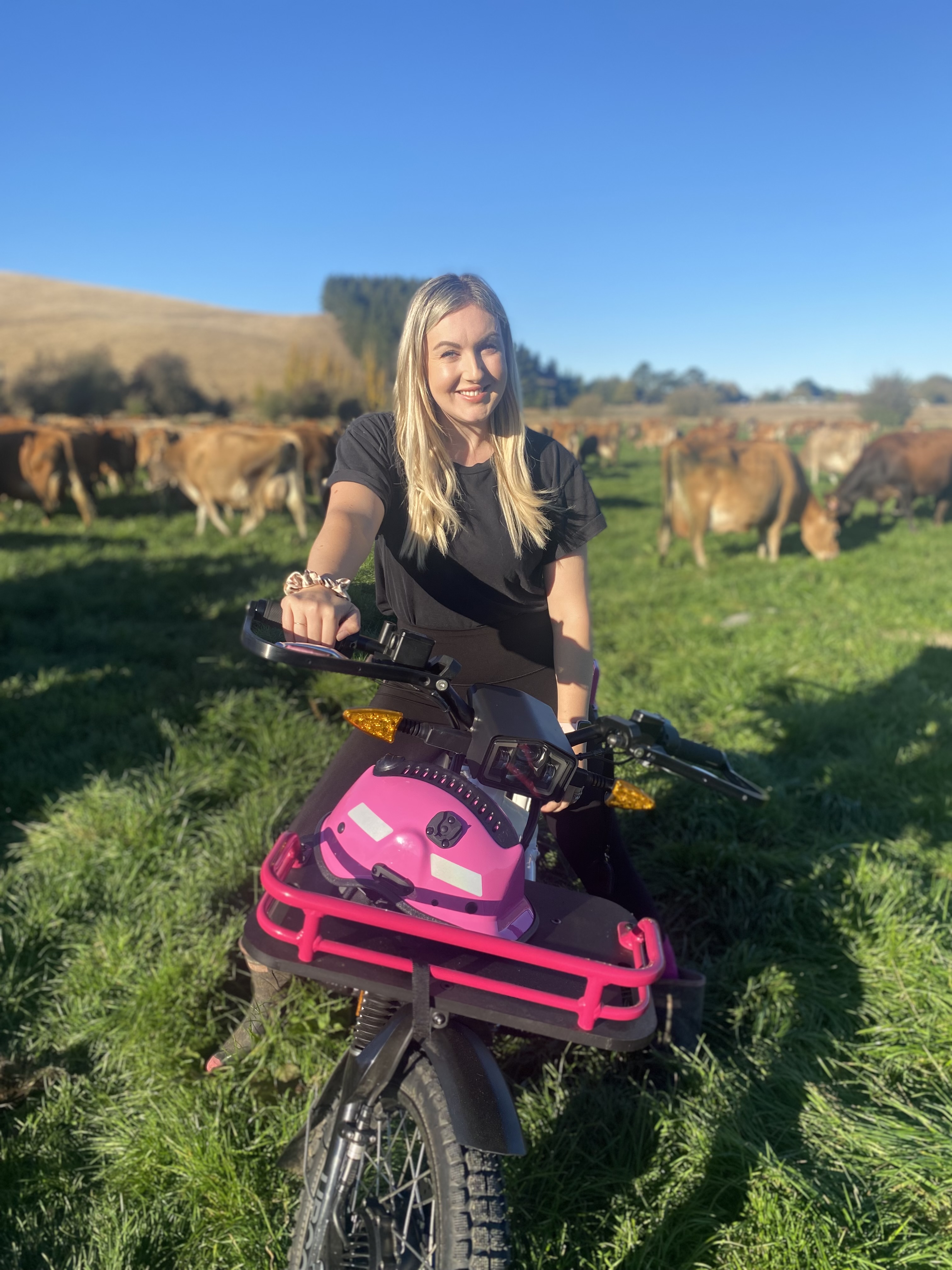
Jersey cows are at the heart of the Kings’ system.
“Our farm is wet and heavy, and big Friesians would just make more damage,” Ben says. “The Jerseys forage better, graze harder, and suit the land.”
Skepticism around Jerseys in Canterbury remains, but the Kings’ results are hard to ignore.
“Our Jerseys have outperformed crossbreds here,” Ben says. “Last season we did 559 kgMS per cow, and the Jerseys are totally outperforming on efficiency.”
Today, around 65% of the herd is Jersey, with a long-term goal of becoming pure Jersey. The system also generates income from surplus heifers and Jersey bulls, reducing the number of bobby calves.
People and work ethic
For Ben, success comes down to “hard work and good people.”
Their long-term staff, Justine Adrejilo and Armando Talampas, have been with them for years, joining more through word of mouth than advertising.
The Kings also place a strong focus on staff wellbeing.
“We’ve always run a five-two roster. When I started out farming, I did 110-hour weeks, but that’s not sustainable. Our guys would be lucky to do half that now,” Ben says.
Calf rearing
Allie has taken charge of calf rearing - although she recently scaled back during pregnancy.
“Ben picks up calves three or four times a day to check both cow and calf health. Every calf gets colostrum within six to eight hours,” she says.
They use Optiguard mineral powder and introduce meal early to support rumen development. Losses are minimal: last season, just one calf out of more than 200 died in the pens.
Mental health and balance
Both acknowledge the mental toll of farming.
Allie has been open about living with anxiety and depression.
“I’m more aware of what I need to do to keep that dark dog away. For me, Dairy Women’s Network has been huge. It gave me community, confidence, and connection.”
Ben takes a different approach. “Nothing will break me. I compartmentalise problems. At the end of the day, it’s just work or money. What matters is family.”
Together, they make time for small rituals like daily coffee at the local Red Post café.
“Quality time doesn’t have to be far from the farm,” Allie says. “We’ve got 170 hectares of beautiful landscape.”
Advice for young farmers
Their advice to the next generation is clear: work hard, seize opportunities, and don’t shy away from sacrifice.
“This industry has limitless potential,” Ben says. “Where else, without a degree, can you be self-employed at a young age, building real equity? But you have to be consistent, treat people well, and be willing to put in the effort.”
By Claire Inkson
Follow Ben and Allie on Instagram at dairykingznz where they showcase their journey, the positive side of agriculture and promote dairy farming as a career pathway.